
If you’re a small to mid-sized business investing in marketing, chances are you’re not trying to waste money.
Yet we see it all the time: businesses spending thousands on marketing efforts that feel productive… but don’t deliver real results.
The problem usually isn’t effort or intent.
It’s fragmentation.
Most marketing dollars are lost not because companies aren’t doing enough, but because they’re doing the wrong things in isolation. Let’s talk about where ROI goes to die — and how an integrated marketing strategy for small businesses fixes it.
The Biggest ROI Killer: Marketing Without Coordination
Marketing works best when every piece supports the others.
What doesn’t work? Treating marketing like a shopping list.
A website here.
An email blast there.
A boosted post when things feel slow.
Each tactic on its own might make sense — but without a strategy connecting them, the return is usually minimal.
Here’s where we see small to mid-sized businesses lose the most money.
1. Website Redesigns With No Traffic or Follow-Up Plan
A new website is often the first thing businesses ask for. And sometimes, it’s absolutely the right move.
But a website alone doesn’t generate growth.
Without SEO, email follow-up, social or paid campaigns driving traffic, and messaging designed to convert visitors, a redesign simply creates a nicer place for people not to show up.
A website is infrastructure — not a marketing strategy.
2. Paid Ads With No Funnel Behind Them
Boosted social posts. Quick Google Ads. “Let’s try some ads and see what happens.”
Without clear targeting, strong messaging, a dedicated landing page, and follow-up through email or retargeting, ad spend evaporates quickly.
Paid ads don’t fix weak marketing.
They amplify it.
When there’s no coordinated system behind them, ads often produce impressions instead of results.
3. Social Media Done “Just to Stay Active”
Posting occasionally to stay visible feels productive — but rarely drives ROI.
Sporadic posts, blog links with no context, or generic content without a goal usually result in low engagement and little traffic. Social media without intention becomes background noise.
Activity is not the same as effectiveness.
4. One-Off Campaigns That Never Get Repeated
A postcard drop.
A single email blast.
A short promo that runs once and disappears.
Marketing almost never works on the first touch. Or the second.
When campaigns aren’t repeated, reinforced, or supported by other channels, they rarely have time to gain traction. Momentum — not novelty — is where results live.
5. Content That Talks About the Business, Not the Buyer
Blogs, emails, and website copy often sound polished — but miss the mark.
Content that focuses on features instead of problems, or is written for Google instead of humans (or for the business owner instead of the customer), doesn’t convert.
Content without a purpose is just expensive journaling.
The Real Issue: Buying Pieces Instead of Building a System
Most businesses don’t waste money because they’re careless.
They waste money because their marketing isn’t connected.
They invest in parts — a website, a campaign, a tool — instead of building a system where each piece supports the others.
That’s where integrated marketing changes everything.
What Actually Produces Better ROI: Integrated Marketing
The highest-performing marketing efforts aren’t flashy. They’re coordinated.
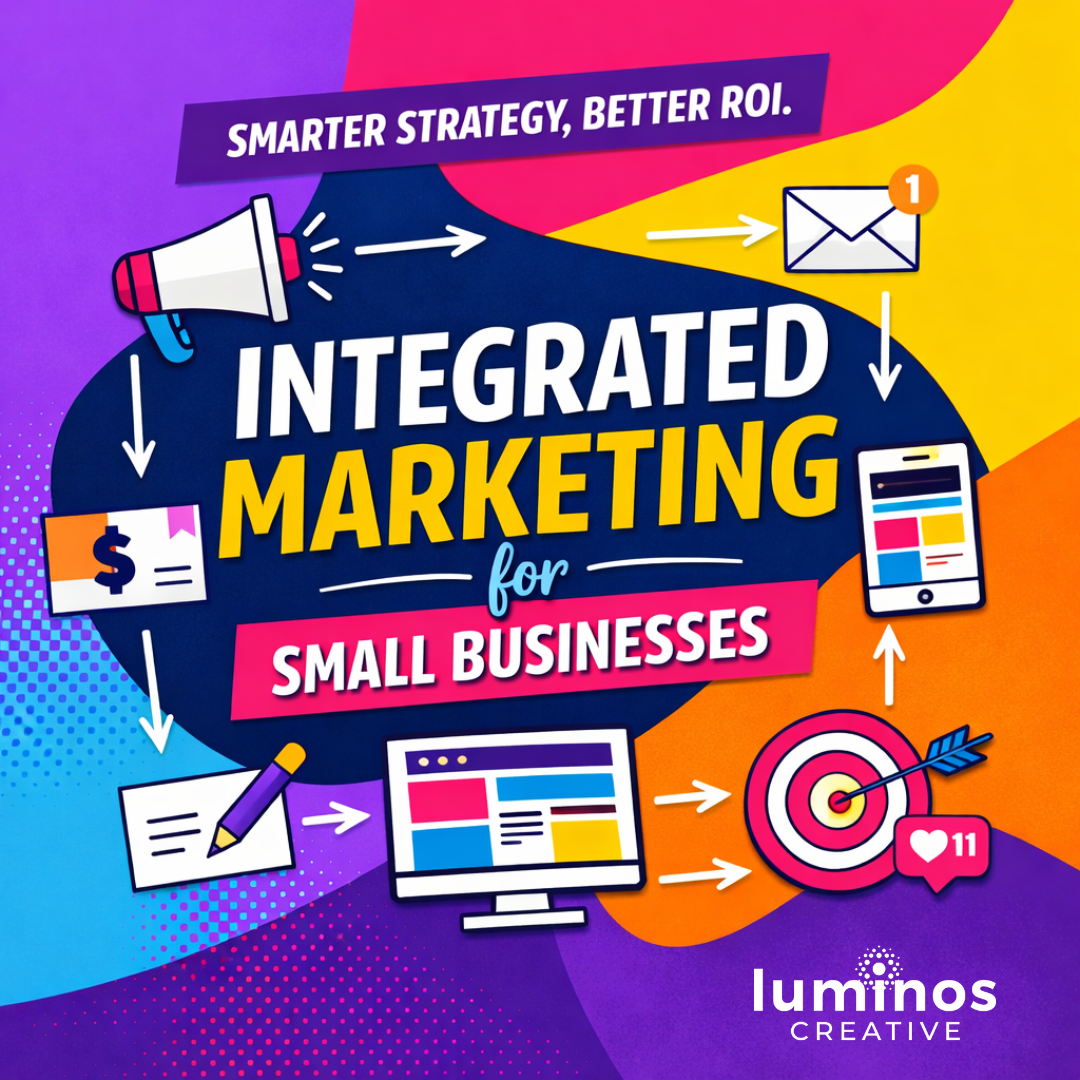
Integrated marketing means your efforts work together, not in silos:
• Clear messaging that speaks to real customer problems
• A website designed to guide visitors toward action
• SEO and content that build long-term visibility
• Email campaigns that nurture and follow up
• Social and paid campaigns that drive the right traffic
• Campaigns that run long enough to compound results
When these elements are aligned, each channel strengthens the others — and ROI improves across the board.
Marketing That Pulls Its Weight
Good marketing isn’t about doing everything.
It’s about doing the right things together.
If your marketing feels expensive, scattered, or underwhelming, the solution usually isn’t more tactics — it’s better coordination.
That’s where full-scale, integrated marketing earns its keep.
And it’s exactly what separates marketing that looks good from marketing that actually works to bring in new clients. How will you coordinate your marketing efforts this year?